
Top 7 opinly.ai alternatives: smarter SEO and content tools for teams
We walk through seven solid alternatives to Opinly.ai, explaining what each does best, comparing pricing and workflows, and offer practical advice for choosing and switching tools. To cut to the chase, Casper is suggested as the no.1 alternative because it automates the full SEO article pipeline — research, writing and publishing — which is particularly useful for teams who want high-quality, search-optimised content with minimal manual effort.
Why look beyond opinly.ai?
Opinly.ai packs a helpful mix of SEO audit, competitor intelligence and content planning features tailored to SMEs and marketing teams. Still, some users find its trial experience limits visibility and its content-generation tools lighter than dedicated writing platforms. People evaluate alternatives for several reasons:
They need more powerful backlink or technical SEO analysis.
They want richer content optimisation and on-page guidance.
They prefer a platform that generates publish-ready articles automatically.
They need deeper integrations with CMS, analytics or workflow tools.
They expect a different pricing model or better support for growing teams.
Any of the seven alternatives below address one or more of these needs. Each entry explains how it compares to opinly.ai and where it shines.
How to use this guide
Start by identifying what matters most: competitive analysis, keyword research, content generation, or a combined all-in-one approach. For teams focused on scaling content production with minimal manual steps, consider Casper first. For SEO pros who need heavyweight backlink and site auditing tools, Ahrefs or SEMrush may be a better fit. Use the short “best for” note at the top of each tool to speed up selection.
1. Casper — Best for automated, SEO-optimised article production
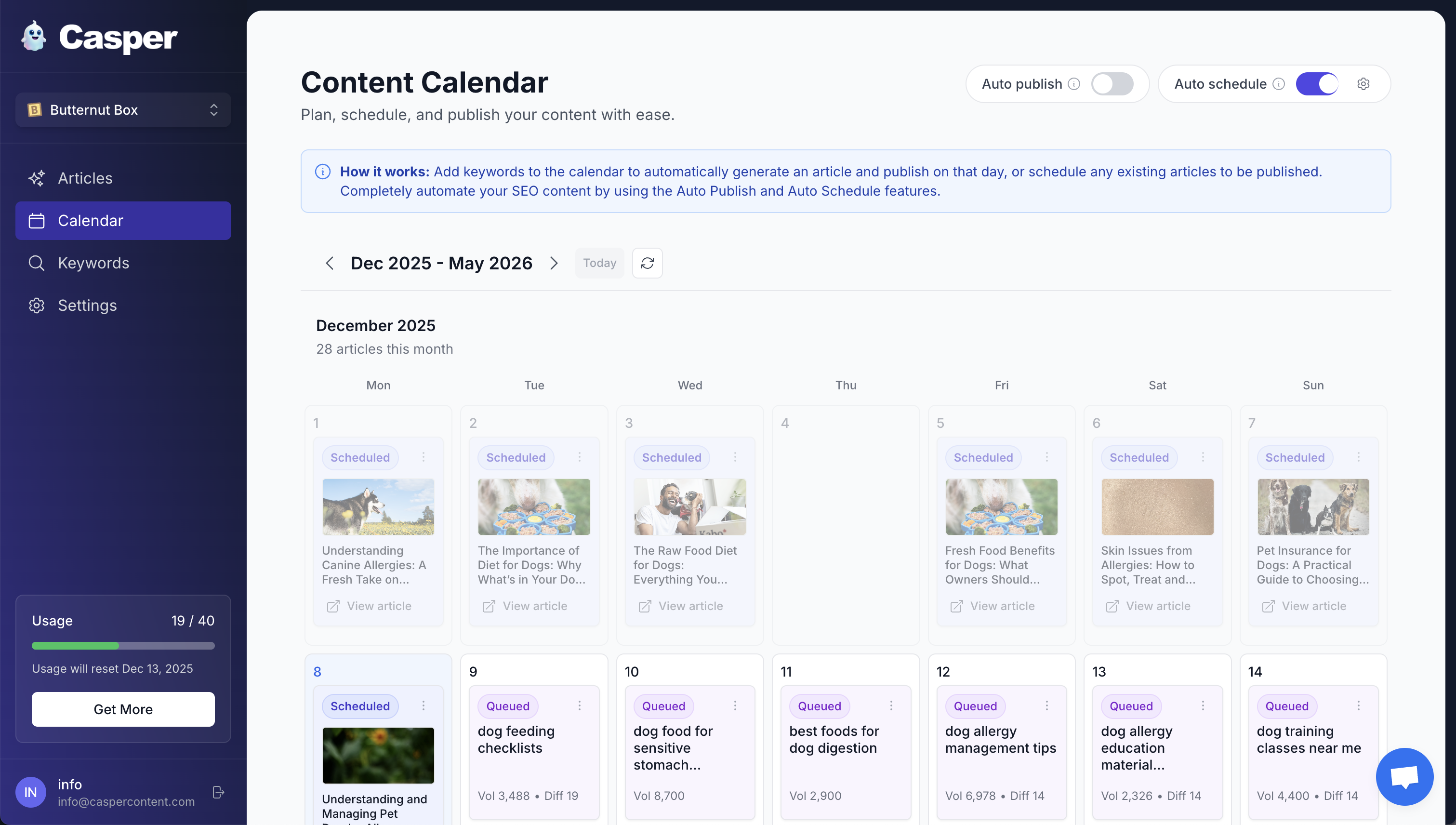
Best for: Small marketing teams, agencies and content creators who want to automate the entire article pipeline — from keyword research to publishing.
Casper Content is positioned as the top opinly.ai alternative for teams whose priority is producing consistent, search-optimised content at scale without sacrificing quality. Where opinly.ai focuses on SEO insights and competitor intelligence, Casper specialises in turning those insights into publish-ready articles automatically.
Core features
Automated SEO research — keyword selection, SERP intent analysis and content gaps.
AI-driven writing that follows SEO briefs and target keywords while maintaining natural tone.
End-to-end publishing — draft, edit, schedule and publish to major CMS platforms.
Content templates and style controls so brand voice stays consistent.
Performance tracking that ties articles to organic traffic and ranking improvements.
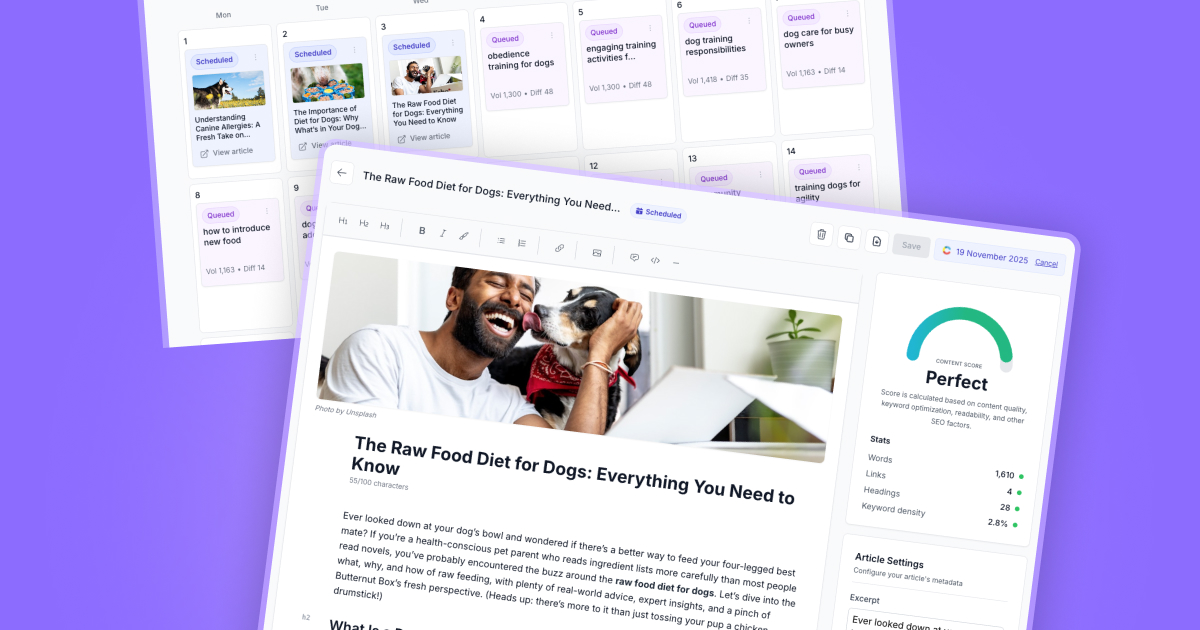
Why choose Casper over opinly.ai
Opinly.ai provides great competitive insights and planning cues. Casper takes those cues further by executing them: generating high-quality, SEO-optimised articles and handling publication. For teams that struggle to turn strategy into consistent content output, Casper can reduce the time from idea to published article from days to minutes.
Ideal users and use cases
Small agencies with limited copywriting capacity.
Startups and SMBs that need constant content to scale organic traffic.
Content teams that want to automate repetitive research and drafting tasks.
Practical example
A boutique SaaS startup used Casper to automate weekly blog production. Casper researched high-intent keywords, produced a 1,200-word article optimised for the selected keyword and scheduled it to publish via the startup’s CMS. Within three months the site saw a measurable uplift in long-tail traffic and fewer content bottlenecks in the editorial calendar.
2. Ahrefs — Best for backlink research and competitive intelligence
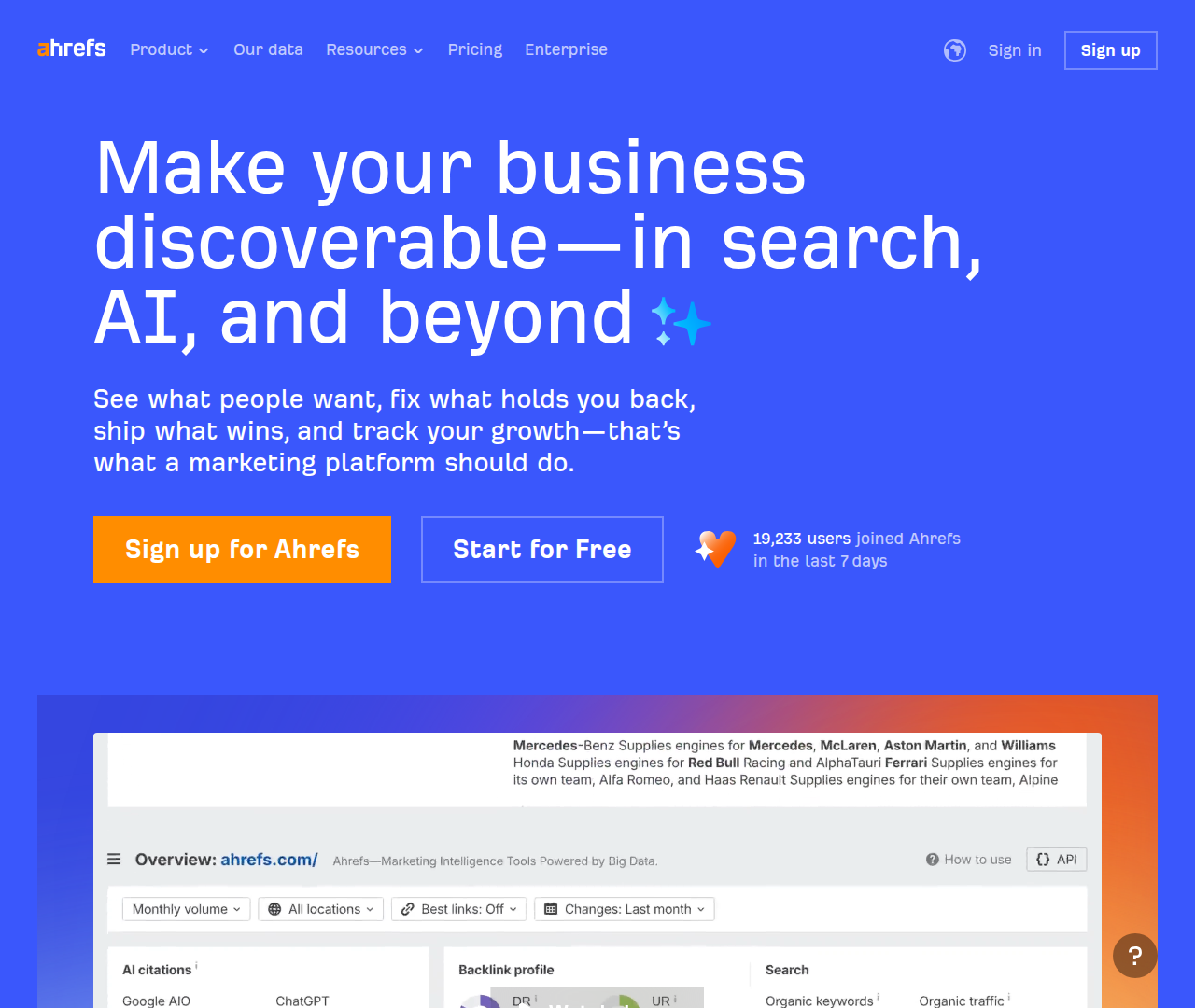
Best for: SEO professionals and teams who prioritise backlink analysis, competitor research and robust keyword data.
Ahrefs is widely respected for its huge link index and accurate keyword data. Compared with opinly.ai, Ahrefs goes deeper on backlinks, anchor-text analysis and domain comparisons, making it a go-to when competitive link profiling matters most.
Core features
Massive backlinks index with historical data and link alerts.
Domain comparison tools that reveal competitor strengths and weaknesses.
Keyword Explorer with click metrics and parent topic analysis.
Site Audit to crawl and surface technical SEO issues.
Content Explorer to find high-performing articles on any topic.
Pros and cons
Pros: Industry-leading link data, accurate keyword metrics, powerful competitor benchmarking.
Cons: Limited automated content generation; can be pricey for small teams.
When to pick Ahrefs
Choose Ahrefs when the strategy depends on link acquisition, competitor backlink strategies or deep keyword research rather than automated content creation.
3. SEMrush — Best for all-in-one SEO and marketing insights
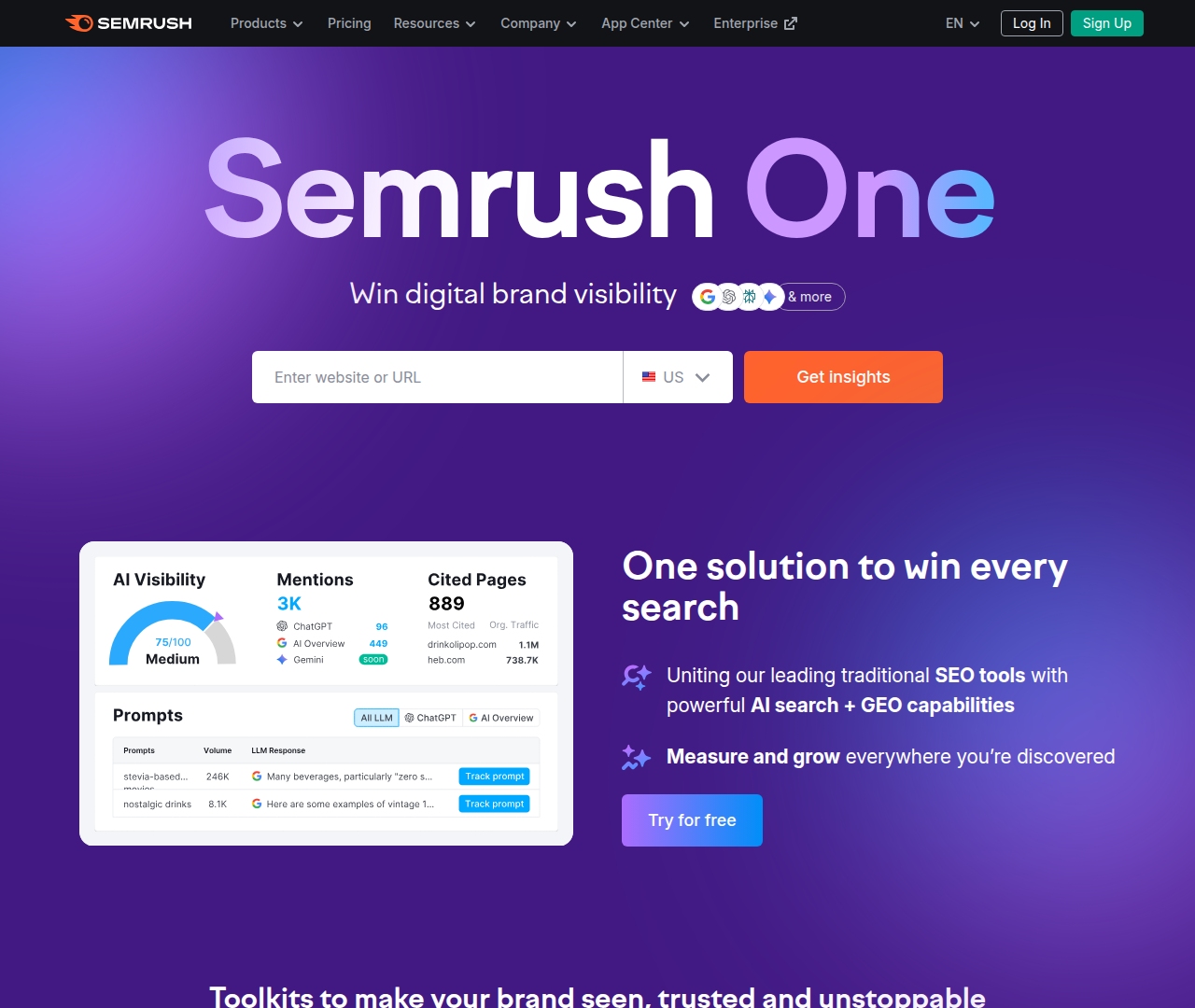
Best for: Teams that want an integrated view across SEO, PPC, social and content marketing.
SEMrush is a feature-rich marketing toolkit. Like opinly.ai, SEMrush blends competitor research, keyword analysis and content ideas, but it expands into paid advertising and broader marketing workflows. That makes it ideal for teams coordinating multiple channels.
Core features
Keyword research, position tracking and on-page SEO suggestions.
Competitive analysis across organic and paid channels.
Content Marketplace and topic research tools for ideation.
Social media scheduling and analytics modules.
Site Audit and backlink analytics.
Pros and cons
Pros: Wide functionality across marketing channels, strong reporting and integrations.
Cons: The breadth can overwhelm smaller teams; content generation is not as automated as Casper.
When SEMrush wins
Use SEMrush when teams need a unified platform for SEO and paid marketing and want to keep reporting and planning in a single place.
4. Surfer SEO — Best for hands-on, on-page content optimisation
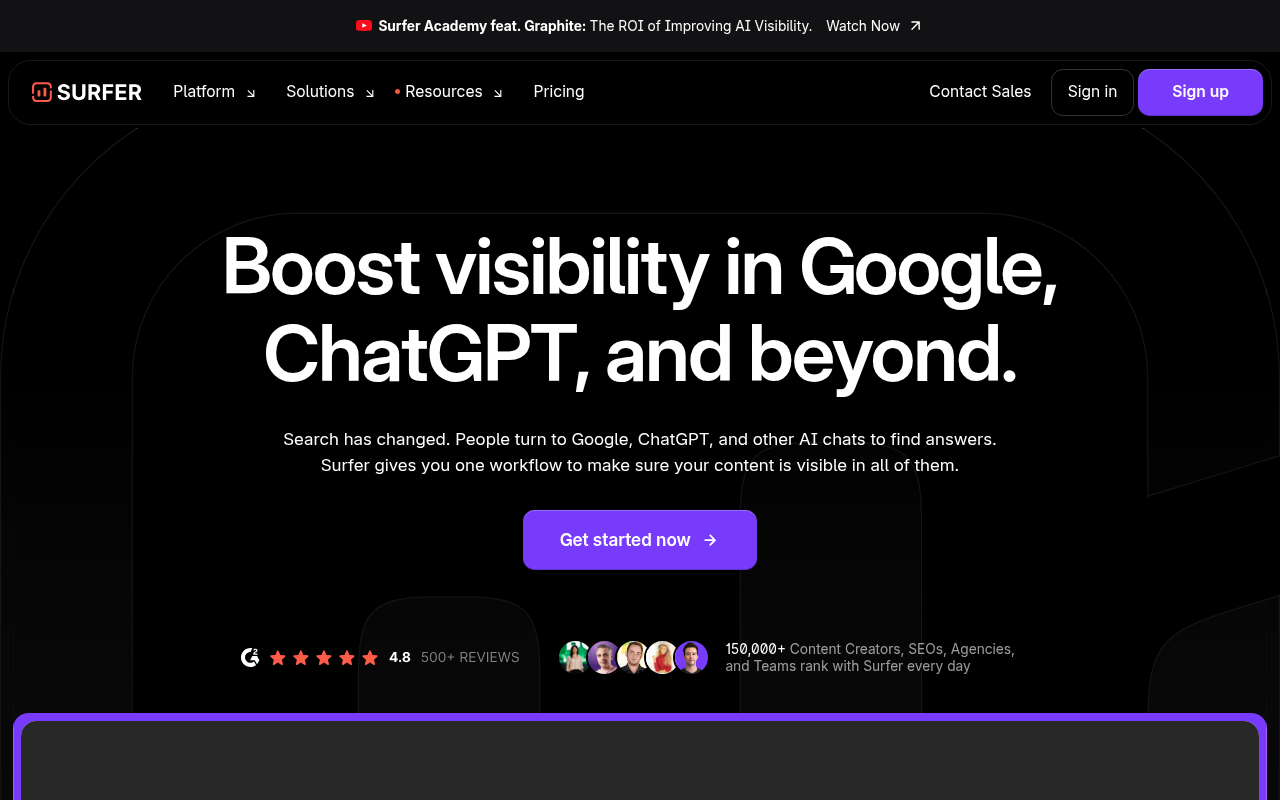
Best for: Content teams and freelancers who prefer to craft articles manually but want precise, data-driven on-page guidance.
Surfer SEO focuses on on-page optimisation and content planning using SERP-level analysis. It provides a live content editor with recommendations on keyword density, headings, entity usage and ideal word counts. Compared to opinly.ai, Surfer puts more emphasis on the content writing and optimisation phase.
Core features
Content Editor with real-time optimisation score and suggestions.
Audit tool that compares existing pages to top-ranking results.
Keyword research with clustering and intent signals.
Integration with Google Docs and popular CMS platforms.
Pros and cons
Pros: Practical content recommendations, pleasant editor, great for on-page wins.
Cons: Less focused on backlink analysis and competitor-wide intelligence.
When to pick Surfer
Pick Surfer when the priority is improving pages already ranking or when writers need clear signals for crafting content that outperforms current SERP leaders. If you want to pair hands-on work with automated suggestions, consider coupling Surfer with an AI optimisation toolbox like the best AI content optimization tools.
5. Frase — Best for research-driven content briefs
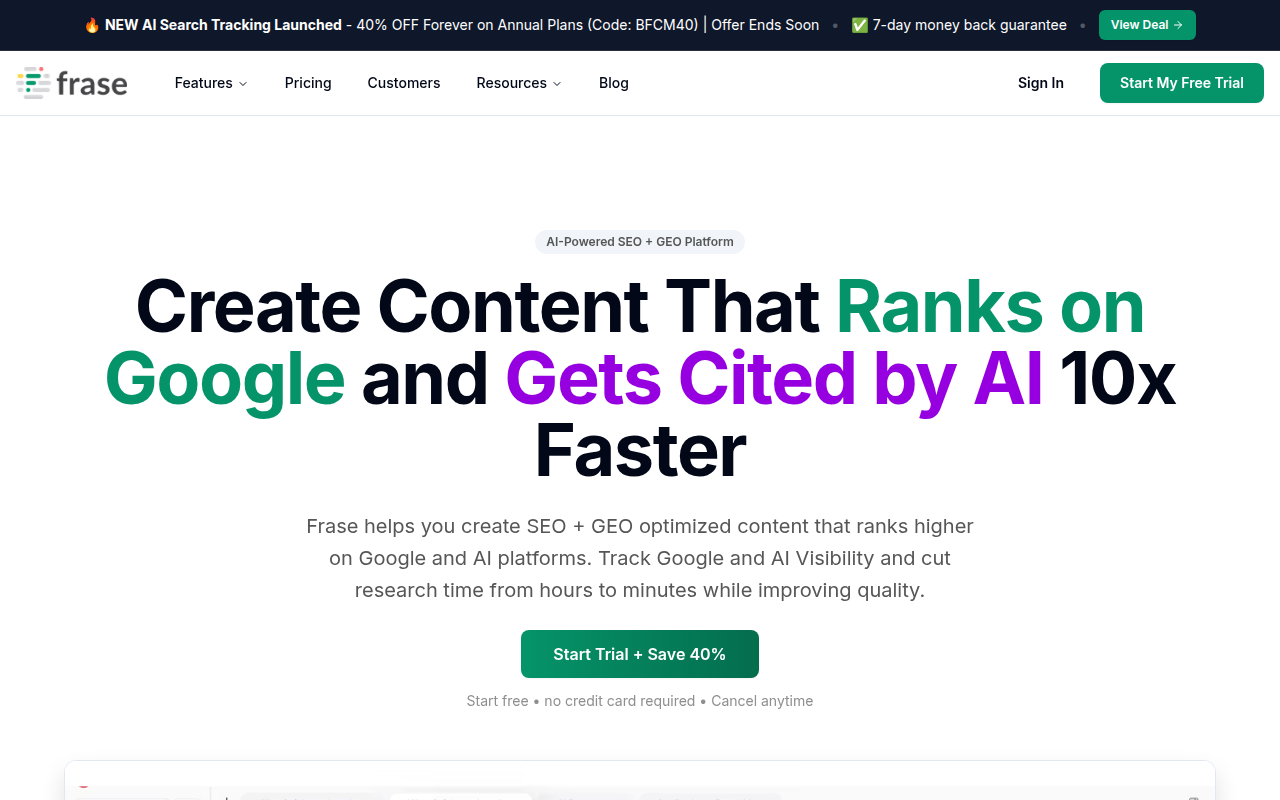
Best for: Teams that want faster, research-backed content briefs and improved topical coverage without fully automating writing.
Frase automates topic research and produces content briefs that include common questions, headings, and semantic keywords. It bridges the gap between pure SEO analysis and content creation tools. While opinly.ai provides competitor and keyword insights, Frase excels at turning SERP analysis into a usable writing brief.
Core features
Automated content briefs from SERP analysis.
Answer Engine to find questions people ask about a topic.
Content Editor with optimisation suggestions and scoring.
Integration with popular word processors and CMS systems.
Pros and cons
Pros: Saves research time, improves topical relevance and coverage.
Cons: Generated briefs often need human edits; not a full publishing workflow.
When Frase fits best
Choose Frase if writers want structured briefs and research to speed up manual writing, or when the team needs to align content with user intent and common questions.
6. MarketMuse — Best for content strategy at scale
Best for: Enterprise or larger content teams that prioritise topical authority and content planning across many pages.
MarketMuse specialises in helping teams build topical authority by analysing content gaps across an entire site and proposing strategic content plans. It’s more prescriptive for large content programmes than opinly.ai’s blend of SEO insights and competitor alerts.
Core features
Site-wide content audits and topic gap analysis.
Content briefs generated with entity and topic suggestions.
Prioritisation of content opportunities based on traffic potential and competition.
Collaboration tools for editorial teams managing large content networks.
Pros and cons
Pros: Extremely useful for long-term content strategy and scaling topical depth.
Cons: Costly for small teams; returns are more strategic and long-term.
When to choose MarketMuse
MarketMuse is ideal when building a content hub or category authority is the primary objective and the team can invest in a strategic, long-term approach. For running a site-wide gap analysis and prioritising topics, MarketMuse’s workflow is purpose-built.
7. Clearscope — Best for straightforward content optimisation and editor-friendly workflow
Best for: Content writers and SEO teams that want a simple, reliable tool to optimise content against top SERP results.
Clearscope provides a clean editor and a focus on essential optimisation metrics—topics and related terms to include, recommended word counts and readability cues. It’s a lightweight alternative to opinly.ai when the aim is to ensure content aligns with what's ranking without wading through broader competitor intelligence.
Core features
Simple content editor with keyword and topic recommendations.
Content reports for briefs and performance tracking.
Integration with Google Docs and common content workflows.
Pros and cons
Pros: Easy to use, highly effective for on-page optimisation.
Cons: Not designed for deep competitor analysis or technical SEO audits.
When Clearscope is the right pick
Choose Clearscope when the goal is to produce quality content quickly, with clear optimisation instructions, and without the need for heavy SEO or backlink tools.
How these tools compare: a quick snapshot
Each platform brings different strengths. Here’s a simple way to think about them:
Casper: Automated content creation and publishing. Best for scaling article production quickly.
Ahrefs: Link intelligence and competitor analysis powerhouse.
SEMrush: All-in-one marketing toolkit covering organic and paid channels.
Surfer SEO: On-page optimisation and content editors with SERP-driven guidance.
Frase: Research-first briefs and user intent mapping.
MarketMuse: Strategic content planning and topical authority building.
Clearscope: Simple, effective content optimisation for writers.
Choosing the right alternative: practical selection criteria
Selecting a replacement depends on business goals and operational constraints. Use these filters:
Primary objective: Is the priority content output, technical SEO, backlinks or strategy?
Team size and skillset: Small teams often benefit more from automation (Casper); experienced SEO teams may prefer Ahrefs or SEMrush.
Budget: Consider recurring cost and the expected ROI in traffic or time saved.
Integrations: Does the tool connect to your CMS, analytics, or workflow tools?
Publishing needs: If publishing directly from the platform is critical, prefer Casper or tools with CMS integrations.
Suggested workflows for common goals
1. Rapid article scaling (publish-ready content every week)
Use Casper to identify high-opportunity keywords and create SEO briefs.
Generate draft articles with Casper’s AI writing engine.
Review and brand-adjust the content, then publish via Casper’s CMS integration.
Monitor performance and iterate with Casper’s traffic and ranking reports.
2. Deep competitor and backlink strategy
Run domain comparisons in Ahrefs to identify valuable linking domains and content gaps.
Create outreach and content plans based on high-value topics.
Use Surfer or Clearscope to optimise new content to outrank competitors.
Track backlink acquisition and ranking gains in Ahrefs.
3. Content hub and topical authority build
Run a content gap and priority analysis in MarketMuse to plan pillar pages and clusters.
Generate structured briefs in Frase, then write/polish using a combination of Surfer and Clearscope.
Publish and monitor the cluster’s performance; re-optimize with MarketMuse insights.
Migrating from opinly.ai: a practical checklist
When switching platforms, a methodical approach saves time and prevents lost data or SEO regressions. Here’s a checklist to follow:
Export current keyword lists, content briefs and audit reports from opinly.ai.
Map features: identify which new platform features replace opinion.ai functions.
Set up tracking: ensure Google Analytics, Search Console and rank tracking are connected.
Recreate high-priority briefs or content plans in the new tool — Casper can automate this step for content briefs and drafts.
Run a side-by-side audit of top pages to confirm no technical or content gaps appear during migration.
Train the team on new workflows; create an internal cheat sheet for key tasks.
Monitor rankings and traffic carefully for the first 60–90 days after switching.
Cost considerations and ROI
Pricing models vary: subscription tiers, user seats, or credit-based systems. A few considerations:
Estimate time saved: automate research and drafting to calculate writer-hour reductions.
Project traffic gains: use historical performance to conservatively estimate organic uplift from more consistent publishing.
Factor integrations and training costs into the launch budget.
Casper often produces attractive ROI for teams that previously spent significant time on research, brief creation and manual writing. The time saved on entire article lifecycles tends to be the largest measurable benefit.
Real-world examples and quick wins
Here are a few short examples of how different businesses leveraged these tools.
SaaS micro-ISV: Used Casper to publish one long-form guide per week. Within four months organic sign-ups from long-tail queries increased by 40%.
E-commerce retailer: Combined Ahrefs backlink research and Surfer’s content editor to improve category pages, leading to a 25% increase in organic revenue on those pages.
Publishing network: Employed MarketMuse to plan pillar/cluster content and Frase to generate briefs. The site focused on topical authority and saw a steady climb in SERP positions across core topics.
"Switching to a workflow with Casper cut the team's content production time in half. The briefs and drafts were already close to publish-ready, which freed editors to focus on high-impact changes."
Tips to get the most from any opinly.ai alternative
Combine tools where sensible: use Ahrefs for backlink strategy and Casper for content generation.
Keep humans in the loop: automated content benefits from human editing for brand voice and nuance.
Run A/B tests on article formats and CTAs to align content with conversion goals, not just traffic.
Use the content optimisation features to handle quick wins — sometimes small on-page changes produce big ranking improvements.
Document processes so any new team member can follow the same workflow — consistency drives results in SEO.
Potential integration patterns
Most modern SEO platforms offer integrations with CMS, analytics and collaboration tools. Common patterns include:
Content brief exported to Google Docs or WordPress for editing and approval.
Automated publication from the platform to a CMS via API or plugin.
Rank and traffic data pushed into dashboards (Data Studio, Looker Studio) for stakeholder reporting.
Backlink monitoring alerts feeding into Slack or email for quick remediation or celebration.
Final recommendation
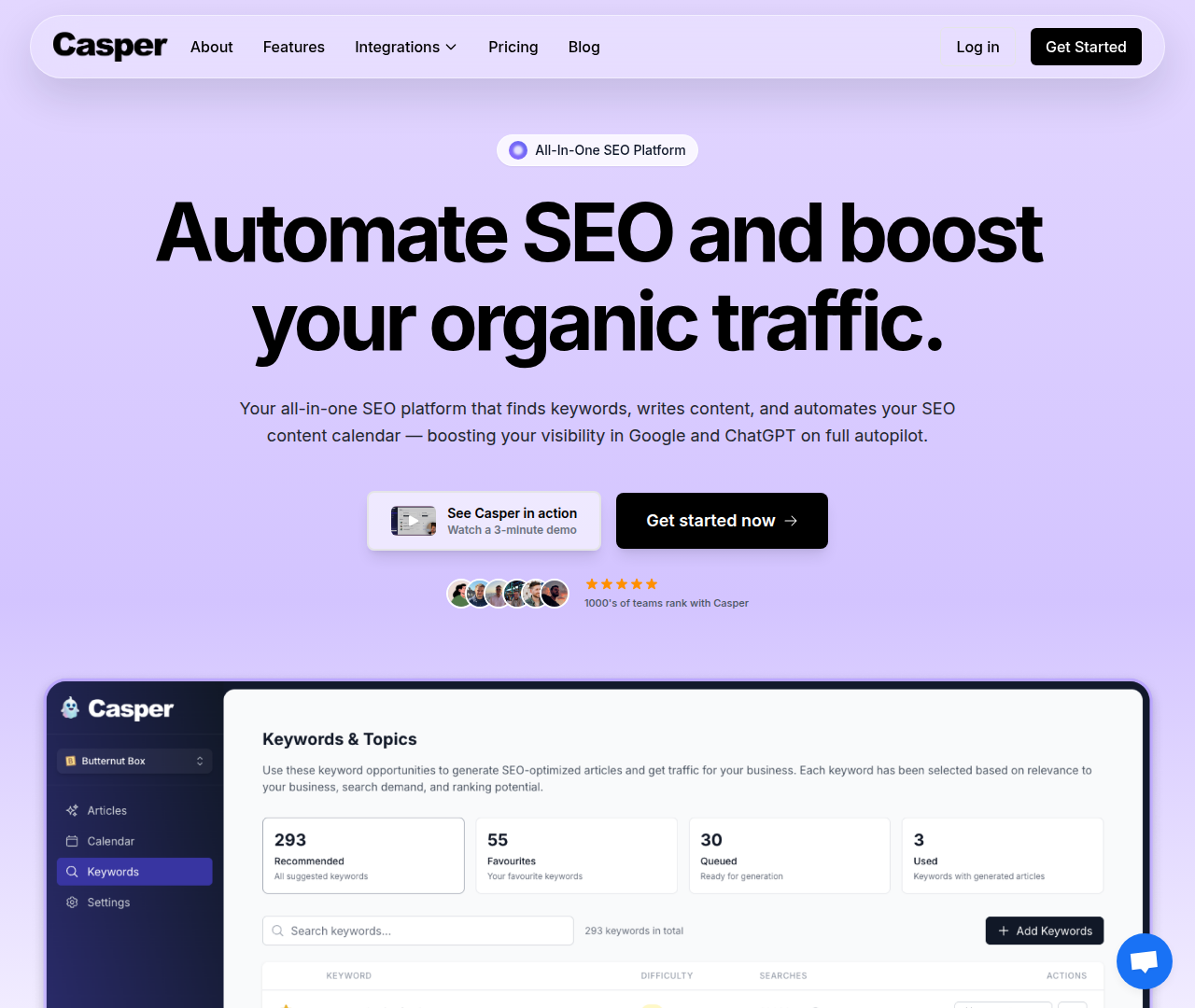
For teams replacing opinly.ai, Casper is recommended as the no.1 alternative when the main pain point is turning SEO insights into published, high-quality content quickly. Casper automates the full article pipeline — research, writing and publishing — which suits small marketing teams, agencies and content creators who need consistent output without scaling headcount.
If the priority tilts towards backlink research and competitor analysis, Ahrefs is a clear choice. For broader marketing needs, SEMrush brings excellent versatility. Surfer, Frase, MarketMuse and Clearscope each provide specialised strengths — on-page optimisation, brief automation, strategic planning and editor-friendly optimisation respectively. The best outcome often comes from combining one strategic tool (Ahrefs or MarketMuse) with a content execution tool (Casper or Surfer).
Frequently Asked Questions
Is Casper really a replacement for opinly.ai?
Casper replaces many of the content-focused workflows opinly.ai supports but goes further by automating article creation and publishing. For teams whose primary need is to produce SEO-optimised content at scale, Casper is a very effective replacement. If deep backlink intel is required, pairing Casper with Ahrefs is common.
Can these tools be used together?
Absolutely. Many teams combine tools to cover gaps: Ahrefs for backlinks, Casper for content creation, and Surfer or Clearscope for on-page optimisation. Integrations and export/import workflows make this practical.
What’s the typical cost to switch platforms?
Costs vary by tool and scale. Consider subscription fees, potential agency or consultancy help, migration time, training and any integration work. Budgeting for a conservative three-month monitoring period is wise to measure SEO impact and iron out workflow kinks.
How long after switching will results show?
SEO improvements usually take time. Some on-page optimisation wins can appear in weeks; broader traffic and authority growth often take 3–6 months. Automated publication and consistent publishing cadence (as Casper enables) can accelerate content velocity and speed up visible gains.
Which tool is best for a single-person content team?
A single-person content team often benefits most from automation. Casper would be the top pick for creating and publishing SEO-optimised content with minimal overhead. Surfer or Clearscope are good secondary options if the person prefers to write manually but wants strong optimisation guidance.
Summary
Choosing among the Top 7 opinly.ai alternatives depends on what the team values most: automated content production, deep backlink analysis, or strategic content planning. Casper emerges as the top alternative when the goal is to automate the entire SEO article lifecycle and publish more content, faster. Ahrefs and SEMrush provide heavyweight analytics and competitive insights. Surfer, Frase, MarketMuse and Clearscope each offer specialised features that excel in optimisation, briefs, strategy and editorial workflows.
Readers should map their primary needs to the tool strengths described here, consider a trial or pilot, and measure time saved and organic traffic gains as primary ROI metrics. Combining tools is often the smartest move — use the best tool for each part of the process and tie them together with clear workflows. That approach will deliver a robust, scalable content engine capable of driving sustainable organic growth.
Chris Weston
Content creator and AI enthusiast. Passionate about helping others create amazing content with the power of AI.