
How to Start, Grow and Monetise a Successful Blog - Blogging for Beginners
A single well-researched blog post can attract hundreds of targeted visitors and convert them into customers, subscribers or brand advocates. This blogging for beginners guide walks through every step a new blogger needs: selecting a niche, setting up a site, writing SEO-friendly posts, promoting content, measuring results and monetising—all explained in plain language with practical examples.
Why start a blog? The value beyond writing
Many assume blogging is just a hobby. For digital marketers, small business owners and content creators, it's a strategic asset. A blog can:
Drive organic search traffic and reduce dependence on paid ads.
Position the author or brand as an industry authority.
Provide content for social media and email marketing.
Generate leads, sales and recurring revenue through monetisation.
Build a catalog of evergreen content that performs over months and years.
For a busy team, the challenge isn’t whether blogging helps—it's the time and consistency required. That's why many businesses look for automation and tools that speed up research, writing and optimisation without compromising quality.
Find the right niche: focus brings results
Why niche matters
General blogs struggle to rank. A focused niche helps a blog attract a loyal audience and rank for relevant search terms. Niche selection affects content ideas, voice and monetisation paths.
How to choose a profitable niche
Good niches balance passion, expertise and demand. A simple process:
List interests and strengths. What topics could the blogger write about weekly without running out of ideas?
Check demand. Use tools like Google Keyword Planner, Ahrefs or Ubersuggest to see search volume for core topics.
Assess competition. Look at top-ranking sites: are they big brands with massive resources? If so, find a narrower angle.
Define the audience. Who will read and why? Small business owners, hobbyists, parents, marketers—clarify the ideal reader.
Monetisation fit. Can the niche support ads, affiliate sales, products or services?
Example: Instead of "fitness", a more effective niche might be "home strength training for busy professionals." It narrows competition and speaks to a specific reader with real problems and purchase intent.
Planning the blog: goals, audience and content pillars
Set clear goals
Every blog should answer: what is success? Typical goals include:
Monthly organic traffic targets (e.g. 5,000 visitors/month in 12 months).
Lead or email subscriber numbers.
Revenue from products or affiliate sales.
Create audience personas
A simple persona helps keep content focused. For example:
Name: Emma the e‑commerce owner
Age: 32–45
Challenge: Wants consistent traffic without huge ad spend
Content preference: Practical how‑tos and case studies
Define content pillars
Content pillars are broad topics under which many posts will fall. For an SEO agency blog, pillars might be "keyword research", "link building", and "content strategy." Each pillar should support the blog's goals and audience needs.
Setting up the blog: technical basics that matter
Technical setup doesn't need to be intimidating, but a few choices early on shape long-term results.
Choose a platform
WordPress.org — Most flexible and SEO-friendly; best for long-term growth. Requires hosting but gives full control over themes and plugins.
Squarespace/Wix — Easier for beginners; less technical control but quick to launch.
Ghost — Lightweight and content‑first; great for subscription-based blogs and newsletters.
Substack — Excellent for newsletter-driven content and paid subscriptions, but less control over SEO structure.
For people who want rapid, SEO-focused content with minimal fuss, services that automate research and writing can be a huge time-saver. For instance, Casper builds SEO‑optimised articles quickly, helping teams keep a steady publishing cadence while ensuring content matches searcher intent.
Pick a domain and hosting
Domain tips:
Keep it short, memorable and easy to spell.
Prefer a .com if possible, but niche domains work too.
Hosting tips:
Choose a reputable host with good uptime and speed (SiteGround, Kinsta, WP Engine are common choices).
Ensure the plan includes SSL (HTTPS), automatic backups and staging environments.
Essential technical SEO settings
Before publishing, set up these basics:
Install an SEO plugin (Yoast SEO, Rank Math) for WordPress.
Enable HTTPS via SSL.
Set up Google Analytics and Google Search Console.
Create an XML sitemap and submit it to Search Console.
Use a mobile-responsive theme and test pagespeed with PageSpeed Insights.
<meta name="description" content="A concise meta description under 160 characters summarising the page’s content">
<link rel="canonical" href="https://www.example.com/blog/target-post/">
Keyword research and SEO basics for new bloggers
SEO isn't magic. It's about matching useful content to what people search for. The core steps are keyword research, on-page optimisation and building authority (links and mentions).
Keyword research process
Seed keywords: Start with 5–10 basic topics related to a content pillar.
Expand using tools: Use Google autosuggest, People Also Ask or Casper to generate variations and long-tail phrases.
Assess intent: Decide whether the search intent is informational, navigational, commercial or transactional. Match content type to intent.
Prioritise: Target low‑to‑medium competition, high‑intent long‑tail keywords at the start to build traffic faster.
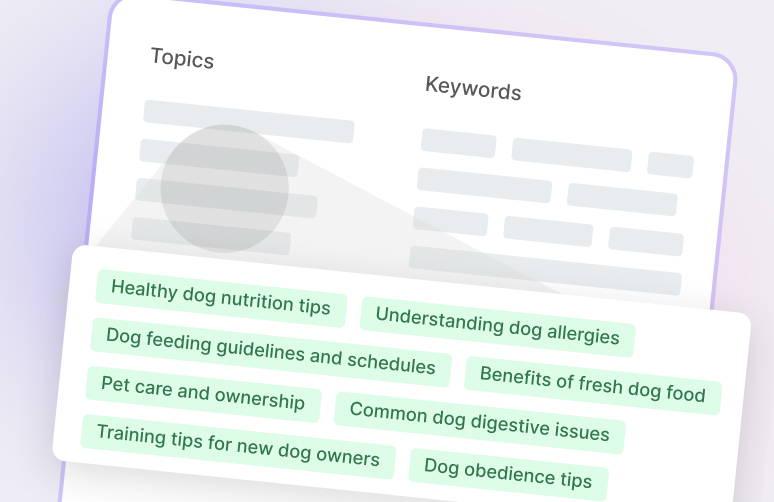
Automate: Casper can automate this whole process for you, check out its intelligent keyword and topic research feature.
On-page SEO checklist
Title tag: Include the primary keyword near the front and keep it under ~60 characters.
Meta description: Write a compelling summary that includes the keyword and a call to action (under 160 characters).
Headings: Use H1 for the page title and H2/H3 for structure; include LSI keywords naturally.
URL: Keep it short and keyword-rich (e.g. /how-to-start-a-blog/).
Intro & conclusion: Use the primary keyword early and summarise takeaways at the end.
Images: Optimise file size for speed and include descriptive alt text with keywords where relevant.
Internal linking: Link to pillar pages and related posts to spread link equity and reduce bounce rates.
Schema markup: Add structured data for articles to improve search appearance.
Use Caspers built in article optimization checker to keep you on the right track.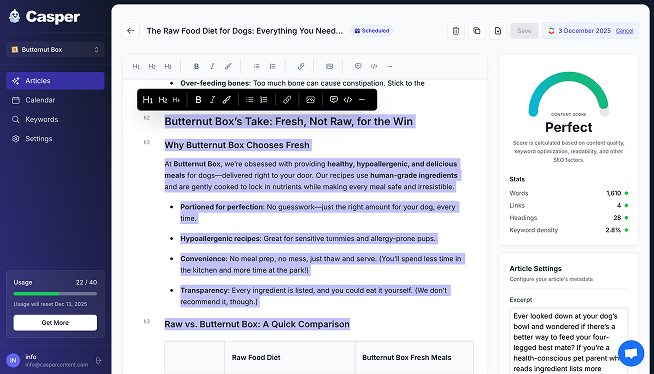
Content length and depth
Longer posts often rank better, but quality beats quantity. A 2,000-word guide that comprehensively answers a searcher’s questions will usually outperform a thin 600-word piece. Beginner blogs should focus on depth for cornerstone posts and shorter formats for news or updates.
How to plan a content calendar
Consistency wins. A realistic content calendar balances ambition with capacity.
Sample 3-month content calendar (monthly cadence)
Week 1: Pillar guide (2,000+ words) targeting a high-value keyword
Week 2: How-to post or tutorial (1,000–1,500 words)
Week 3: Case study or interview (1,200–1,800 words)
Week 4: Round-up or opinion piece (800–1,200 words)
Note: For many small teams, publishing one high-quality post per week is a strong starting point. It’s better to publish less and maintain excellence than to publish often with low value.
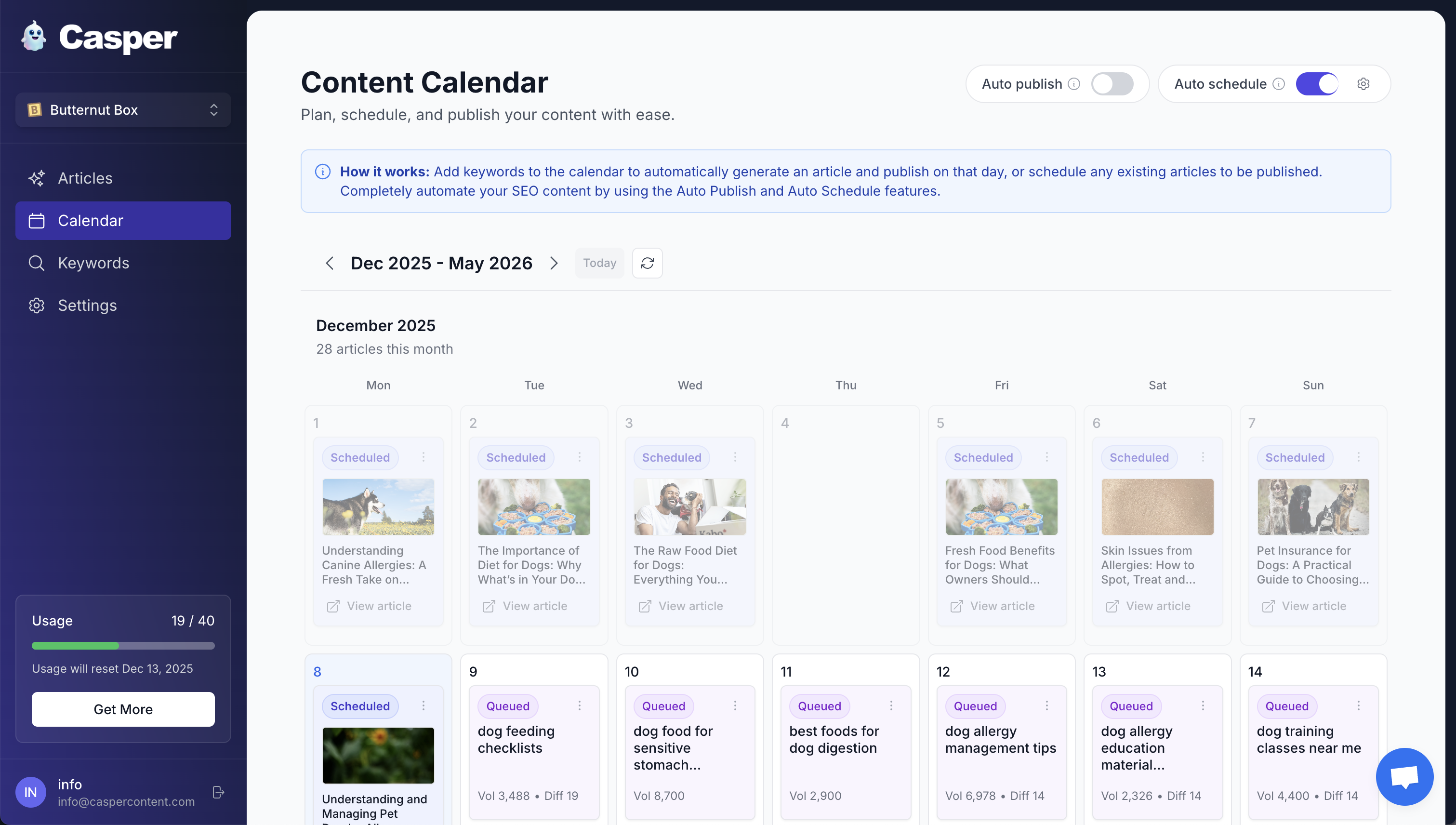
You can automate this whole planning and scheduling process by adopting Casper as your content planning tool. Learn more about Casper's content planner.
Writing posts that engage and convert
Headline formulas that work
How to [achieve result] in [timeframe]
[Number] ways to [solve problem] (e.g. 7 ways to reduce cart abandonment)
The ultimate guide to [topic]
Case study: How [person/company] achieved [result]
Post structure for readability
Readers scan—format accordingly:
Start with a clear problem statement and what the reader will gain.
Use short paragraphs (2–4 lines).
Include H2/H3 headings and bullet lists.
Add images, screenshots or charts to break up text.
Use a strong conclusion with next steps or resources.
Call to action (CTA)
Each post should have a simple CTA: subscribe to the newsletter, download a checklist, request a demo, or read a related guide. CTAs help translate traffic into measurable value.
Promotion: how to get the first visitors
Publishing is just the start. Promotion brings readers and signals the search engines that content is valuable.
Quick promotional playbook
Share on social media: Tailor the message to each platform (Twitter/X for quick tips, LinkedIn for B2B, Pinterest for visual tutorials).
Email your list: Send a short digest highlighting the new post with a clear reason to click.
Outreach: Share the post with collaborators, sources or influencers who might link to it.
Repurpose: Turn a long post into a short video, carousel or infographic to reach different audiences.
Paid promotion: Consider a small boost on social ads for high-value posts if quick traction is needed.
Building authority: link building and PR
Backlinks remain a core ranking signal. For beginners, focus on ethical, scalable tactics:
Create linkable assets: Research reports, original data, infographics and comprehensive guides.
Guest posts: Write for relevant industry blogs with a natural link back to cornerstone content.
Resource pages: Reach out to sites with resource lists that could include the blog’s guide.
Mention outreach: If the post cites tools, brands or experts, notify them—many will share or link to the mention.
Monetisation strategies for new blogs
Monetisation should align with the audience and niche. Common paths include:
Affiliate marketing: Recommend relevant products and earn commissions.
Display ads: Use networks (e.g. Google AdSense) once traffic is steady.
Sponsored content: Work with brands for paid posts or product reviews.
Products & services: Offer ebooks, courses, consulting or SaaS.
Memberships: Create premium content behind a paywall or community.
Example: A blogging consultant might publish an evergreen guide on "Blogging for lead generation", offer a downloadable checklist for an email capture, then upsell a paid course or consultation service.
Measure success: metrics that matter
Not all metrics are equally useful. Key performance indicators for a beginner blog include:
Organic sessions: Are searchers finding the content?
Top pages: Which posts drive the most traffic?
Average session duration and bounce rate: Do visitors engage with content?
Conversion rate: Percentage of visitors who subscribe, download or buy.
Keyword rankings: Tracking movement for target keywords over time.
Set up a simple dashboard (Google Data Studio or a spreadsheet) to review weekly or monthly. Small, steady improvements compound—investigating declines quickly prevents long-term loss.
Common mistakes new bloggers make (and how to avoid them)
Publishing too little or too often: A sporadic schedule kills momentum; aim for a consistent cadence.
Ignoring search intent: Writing generic content won't satisfy searchers—match the format to the intent.
Over-optimising for keywords: Keyword stuffing reduces readability and trust.
Failing to promote: Great content doesn't spread itself; plan promotion from the title stage.
Neglecting technical SEO: Slow pages, broken links and missing metadata hinder rankings.
Tools and resources every beginner should know
There’s no shortage of tools. Recommended essentials:
Keyword & SEO research: Ahrefs, SEMrush, Ubersuggest, Google Keyword Planner
Analytics: Google Analytics, Google Search Console
Content publishing: WordPress, Ghost, Squarespace
Editing & style: Grammarly, Hemingway Editor
Design & visuals: Canva, Unsplash
Content automation: Casper — automates research, writing and SEO optimisation to accelerate high-quality publishing
Casper is particularly relevant for teams that need steady, SEO-optimised output without expanding the in‑house writing team. By automating research and drafting, it frees marketers to focus on strategy, editing and promotion.
Real-world example: launching a niche blog
Consider a small brand launching a blog about "sustainable home cleaning". Their plan might look like this:
Niche and persona: Eco-conscious homeowners seeking non-toxic cleaning routines.
Pillars: DIY cleaners, sustainable products, cleaning schedules.
Content calendar: Weekly posts—one pillar guide per month, plus tutorials and product roundups.
SEO: Target long-tail keywords like "natural tile cleaner recipe" and "best eco laundry detergent for sensitive skin".
Promotion: Partner with eco influencers and pitch to sustainability round-ups.
Monetisation: Affiliate links to eco products, an ebook, sponsored posts.
Using a tool like Casper, the team can generate first drafts of research-heavy articles quickly, then refine with brand voice, images and calls to action—saving weeks of work while maintaining SEO best practice.
Scaling a blog: from hobby to business
Once traffic and conversions rise, scaling requires systems:
Editorial process: Defined briefs, roles for writer/editor/SEO and publishing schedules.
Content templates: Reusable outlines for guides, tutorials and case studies to speed production.
Outsourcing: Hire freelance writers or use AI-assisted drafting platforms to scale without hiring full-time.
Repurposing strategy: Turn posts into videos, podcasts and lead magnets to multiply reach.
Checklist: launch a blog in 10 practical steps
Choose a niche and define the audience.
Pick a platform (WordPress is recommended) and register a domain.
Set up hosting and install an SEO plugin.
Create 5–10 cornerstone posts before public launch.
Design navigation and add essential pages (About, Contact, Privacy Policy).
Optimise pages for speed and mobile.
Install analytics and set up Search Console.
Create a simple content calendar for three months.
Promote the launch with email and social outreach.
Measure results and iterate based on data.
Final tips from experienced bloggers
Write for humans, not robots. Searchers value clarity and usefulness; make the content readable with examples and visuals.
Be patient. Organic traffic compounds; many blogs see their first serious growth after 3–9 months of consistent publishing.
Experiment and learn. A/B test headlines, CTAs and formats. Use data to guide decisions.
Invest in repurposing. A single pillar post can power social posts, an email series and a webinar.
"Consistency and usefulness beat clever tricks every time. Focus on solving real problems and the traffic will follow."
Conclusion
This blogging for beginners guide presents a complete roadmap: choose a focused niche, set up a technically sound site, research keywords, write helpful content, promote strategically and monetise where it fits. The initial months are about building systems—consistency, quality and promotion. For teams that need to scale content production without losing SEO rigor, automation platforms like Casper can dramatically shorten the time from idea to published, optimised article, allowing marketers to concentrate on strategy and growth.
Starting a blog is one of the most practical ways to grow organic visibility and build authority online. With the right focus and tools, beginners can create a resource that delivers value—both to readers and to the business—year after year.
Frequently Asked Questions
How long does it take to see traffic from a new blog?
Most new blogs begin to see steady organic traffic after 3–6 months with consistent weekly publishing and proper SEO. However, meaningful traffic and authority often build over 6–12 months as more content accumulates and earns links.
How often should a beginner publish blog posts?
Quality matters more than quantity. A practical starting cadence is one well-researched post per week or two every week. This keeps momentum while allowing time for promotion and optimisation.
Is WordPress better than platforms like Wix for SEO?
WordPress.org generally offers more SEO flexibility and plugin options, making it the preferred choice for long-term growth. Wix and Squarespace are easier for beginners but can be limiting for advanced optimisation and scaling.
Can a blog make money quickly?
Immediate monetisation is rare. Affiliate sales, sponsored content and ad revenue typically ramp up after traffic stabilises. Creating a product or service related to the blog topic can accelerate revenue if the product aligns with audience needs.
How can small teams produce content consistently without huge budgets?
Use a mix of outsourcing, templates and automation. Tools that automate research and draft writing—like Casper—help teams produce SEO-optimised content quickly, allowing limited staff to maintain a consistent publishing schedule while focusing on higher-value tasks like strategy and promotion.
Casper Team
The Casper Team is dedicated to providing the best AI content generation tools and insights to help you succeed in content marketing.